I've always been skeptical of “Big Data”, not just because of the hype but some intuitive concerns that using more data would solve problems better. I could never put my finger on it, but over the years got confirmation a few times, e.g. when building or validating models and checking that using just one percent of the data would work just as well for model building. Actually, better, since reducing training time from half a day to minutes enables you to actually try out ideas.
So with joy I discovered a 2018 paper by Xiao-Li Meng: Statistical paradises and paradoxes in big data (I): Law of large populations, big data paradox, and the 2016 US presidential election that adds a statistical underpinning to the fact more data is not necessarily better.
Now I can't say I've understood the paper in detail, but it is well written and I have a bunch of important takeaways I want to share!
If you poll voters before an election, or take a sample of your population for which you have manual labels, the central question is how well you represent the full population. In statistical terms, you are asking about the difference between sample average and population average. Deciding the sampling or selection process is the R-mechanism. It might be a random sample, but especially in “Big Data” it might be self-reported or recorded data.
The key insight is that the difference between sample and population average is a sum of three errors: Data quantity + Problem Difficulty + Data Quality.
The data quantity error is very familiar. It encapsulates the idea that with increasing sample, the difference between sample and population average shrinks. The problem difficulty is related to the variability of responses.
The crucial and often neglected error though is the data quality, which is investigated in this paper.
Data quality is measured by the so-called data defect correlation as the correlation between the selection mechanism R and the response variable. This means that the chance of a record being selected depends on the response itself. It is related to what is known as a “design effect”. If we sample at random, the data defect correlation will be zero. However, in a “Big Data” setting where we recorded, say, 80% of the population, it can become a dominant error as it grows with the square root of N, given a population of size N. The impact becomes apparent when translating the error into effective sample size. The effective sample size is inversely proportional to the square of the data defect correlation. The paper shows that even with an “extremely modest” data defect correlation of 0.05, the effective sample size of half the US population (e.g. the registered voters in the USA) becomes ... 400! The paper has an extensive example on why polling failed to predict Trump's win in 2016 that I won't discuss here, but that is enlightening to read.
And so Meng poses the Big Data Paradox:
The bigger the data, the surer we fool ourselves.
And as much as that was true in the Big Data hype ten years ago, with Internet-sized training sets for LLMs it has becomes extinction-level foolishness!

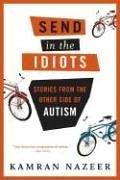 The author went to a special school program for autistic kids in 1982 and he tracked down a few of his former students and teachers in the early 2000s and writes about them. But since he's autistic himself and has made a career in government policy analysis, he is also able to think through aspects of the autistic experience of the world. It's really insightful, sweet and – in parts – sad. Also quite interesting how the general notion of autism from 20 years ago is already very outdated.
The title seems a little heavy tongue-in-cheek, but it refers to a phrase one of the kids repeated over and over back in school as echolalia.

 Have to leave out the Chinese cooking wine though...